
The Hidden Economics of Used Electronics Depreciation
Why used phones and laptops lose value in predictable waves—and how to price smarter, spot scams, and trade with confidence.
1) Depreciation Isn’t Smooth—It Drops in Waves
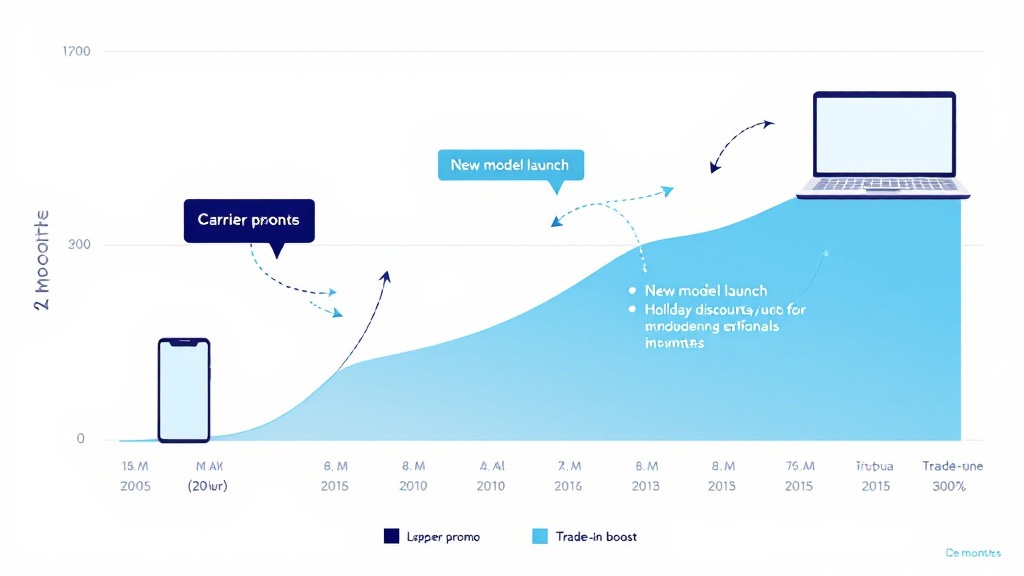
Used electronics depreciation rarely follows a neat, linear curve. It moves in step-changes driven by product cycles: leaks, launch events, and early reviews shift buyer expectations overnight. The week a new iPhone or flagship laptop ships, last year’s model doesn’t just get “a little cheaper”—it often resets to a new market-clearing price as supply spikes and buyers anchor to the new MSRP. In recommerce, those moments create short-lived windows where speed matters more than perfect timing.
Carrier promos and retailer trade-in offers add another hidden force to electronics resale. When carriers run “$0 with trade-in” campaigns, they effectively raise the implied value of certain models—until the promo ends, at which point secondary prices can fall sharply. The same happens around back-to-school and holiday bundles, which inject discounted new inventory that compresses used pricing. If you’re listing, watch these market trends: a strong promo can briefly buoy the comps for specific SKUs, while a major launch typically accelerates depreciation across the prior generation.
2) The Price Is Really a Bundle: Condition, Battery, and Regional Demand

In electronics resale, “same model” doesn’t mean “same value.” The market prices a bundle of risk factors: cosmetic wear, functional tests, included accessories, and especially battery health. Batteries are a predictable cost center—once capacity dips, buyers assume imminent replacement, so depreciation accelerates. On phones, Face ID/Touch ID and camera modules carry outsized weight because failures are expensive and hard to verify remotely. On laptops, keyboard wear, display issues, and SSD size can move pricing more than small CPU differences.
Regional demand also reshapes comps. A configuration that sells quickly in one metro area (or country) can stall elsewhere based on carrier compatibility, language keyboard layouts, and local purchasing power. That’s why structured listings matter in recommerce: consistent condition grading, guided photos, and identifier checks (IMEI/serial) reduce uncertainty and tighten the pricing spread between “optimistic” and “trustworthy.” When marketplaces standardize these fields, market trends show up faster in comps, and honest sellers aren’t forced to compete with vague listings that hide defects.
3) Practical Pricing Heuristics (and How to Spot “Too Good to Be True”)

For sellers and small resellers, pricing works best with a few repeatable heuristics. Start from recent sold comps, then adjust in a structured way: subtract for battery health below ~85%, subtract for missing charger/box, and price more aggressively right after a new launch when depreciation is fastest. If you need speed, list near the lower end of the range for your grade; if you can wait, list mid-range but accept offers. For laptops, storage/RAM upgrades often retain more value than minor CPU bumps—price based on the configuration buyers filter for, not the spec sheet you remember.
For buyers, “too good” usually signals hidden risk: mismatched IMEI/serial, vague photos, refusal to show battery stats, or a price far below the cluster of comparable listings. Watch for rushed language (“need gone today”) paired with off-platform payment requests—classic fraudtech tells. A protected checkout with payout holds tied to delivery confirmation (the escrow-style flow used by TechVerity Marketplace) changes the incentives: sellers are rewarded for accurate condition grading, and buyers get a clear window to confirm the device matches the listing. That’s how pricing becomes fair—and scalable—in recommerce.